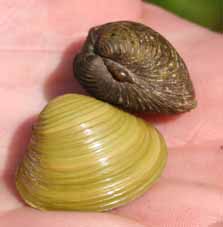
Asian clam (Corbicula fluminea) was recorded from the River Barrow in St. Mullins on 13 April 2010 by Pascal Sweeney and its identity confirmed on 15 April s010 by Evelyn Moorkens.
Like the Zebra Mussel (Dreissena polymorpha) Asian clam has the ability to become highly invasive in a short period of time and at high densities it can alter the food web and compete with native mussel species.
This species was listed as a Most Unwanted potential invader by the Invasive Species Ireland 2007 risk assessment and as one of 13 priority potential invasive species by the EPA STRIVE invasive species project.
What should you do?
If you see this species please take a photograph, note its exact location and submit a record through Alien Watch. The information will be passed on to the relevant experts for verification and can help in preventing the spread of this highly invasive species.
Biosecurity guidance for water users
This guidance is a summary of the key guidance developed as part of the Water Users Code of Practice. The guidance sets out simple instructions to prevent the accidental transfer of a range of invasive species. This guidance should be adopted when removing or transferring any equipment or clothing that has been submerged.
Never knowingly or deliberately introduce the Asian clam or other non-native species into any waterbody on the island of Ireland. If you do so, you may be breaking the law.
Never use this species as bait.
If you have this species in your aquarium or pond, drain all water onto soil and not in any connected water body. Never dispose of water from an aquarium in a manner likely to facilitate the spread of non-native species.
Remove any plants, animals and mud/grit from boats and equipment before leaving a site and dispose of all material in a dustbin or compost heap. Do not return this material to the water as this can help some species spread.
Take the precautionary approach and inspect and treat your equipment every time it is used in a water body. Drain all water from boats or equipment before leaving a site. Thoroughly inspect all exposed surfaces.
Clean all equipment after use. Use high pressure hot water (car wash).
Empty and dry all buckets and dispose of all bait in dustbins before you leave. Do not take bait home, or leave it on the ground or dump it in any waterbody.
Clothing should also be washed and dried out. A salt bath can be effective and straight forward but care should be taken that the bath does not become too diluted.
Divers must thoroughly clean all regulators, BCDs (inside and outside), wetsuits, and any other dive gear. Use a commercially available dive equipment cleaning compound that contains ammonia, vinegar, or chlorine. Allow gear, suit, and other equipment to dry before diving in different waters.
Recommended salt bath for equipment or fishing gear
To make a salt bath you will need
A container large enough to soak your equipment or fishing gear in.
A container to measure the salt and water (eg. a bucket).
Ordinary table salt.
Fresh water.
Make up a salt bath by adding 1 part salt to 14 parts freshwater in the container. Mix until all the salt has dissolved. This will usually take less than 5 minutes but may take longer in cooler temperatures. Soak equipment in the salt water solution for 1 hour or more.
It is advisable to rinse fishing gear in fresh water after salt bath treatment. Nets can be reused immediately or stored for later use in the normal way.