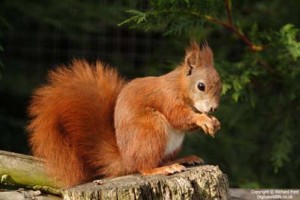
A second outbreak of a fatal red squirrel disease has been confirmed recently at another location in Northern Ireland.
Squirrel Pox, which is carried by the non-native grey squirrel, has been confirmed as the cause of death for two native red squirrels in Glenarm Forest in Co. Antrim.
The disease is carried and spread by grey squirrels which are immune to its effects. It has decimated native red squirrel populations in other parts of the UK, and until recently had not been confirmed in Ireland.
Squirrels with squirrel pox have swelling and discharge from lesions around the eyes mouth and feet, and become increasingly lethargic as the disease progresses. Infected animals normally die within 15 days.
Northern Ireland Environment Agency (NIEA) Senior Wildlife Inspector, Dr Declan Looney said: “This is now becoming a real cause for concern. The previous outbreak was three months ago and over eighty miles away in Co Down. We are monitoring the situation but would ask for the public to remain vigilant and immediately report any squirrels showing signs of the disease to the NIEA wildlife team or to a member of the NI Squirrel forum.
“Many of our native species such as the red squirrel are increasingly under pressure and it is very important that we do all we can to protect them”.
Also commenting on the outbreak, John Griffin from DARD’s Forest Service, added: ‘We will urgently begin work with the adjacent landowner Antrim Estates, the Glens Red Squirrel Group and the other partners within the Northern Ireland Squirrel Forum to implement control measures to safeguard the local red squirrel population at Glenarm. We acknowledge the dedication and vigilance of the Glens Red Squirrel Group which resulted in the discovery of the two suspect cases.’
The decline of red squirrels in the UK is blamed primarily on the effects of squirrel pox as well as the loss of woodlands and competition from grey squirrels.
Notes to editors:
1. Squirrel poxvirus is a virus that causes a fatal disease, ‘squirrel pox’, in UK red Squirrels.
2. The first confirmed incident was in East Anglia in the 1980s. It has since spread to other parts of Great Britain and is regarded as a significant factor in the decline of the red squirrel population in the UK.
3. The virus can be spread through contact with the infected lesions or contaminated crusts. It can also be transferred by contaminated feeders.
4. Grey squirrels are known to have increased their range throughout Northern Ireland over the past 20 years. At the same time the range of red squirrels has drastically decreased. This is thought to be as a result of competition between the two species for available food resources and the grey squirrel’s resistance to squirrelpox.
5. The NI Squirrel Forum is chaired by NIEA and details of membership can be found on the NIEA website. The Glens Red Squirrel Group was formed in January 2008 to protect and maintain red squirrel populations in the Glens of Antrim. Sightings of sick red squirrels can be reported on their hotline number 0871 315 7376.
6. All media enquiries should be directed to DOE Communications on 028 9054 0003. Out of hours please contact the duty press officer via pager 076 997 15440 and your call will be returned.


