


Japanese stiltgrass
Microstegium vimineum
 Print Page
 Send Via Email
Overview
Photo credit: ©James H. Miller & Ted Bodner, Southern Weed Science Society
Microstegium vimineum
Common Names:
Habitat:
Description:
Origin and Worldwide Distribution:
Potential or Known Impacts:
How could it get here?
Is it found in Northern Ireland?
Methods for Prevention:
You can help by reporting any sightings: @ the Centre for Environmental Data & Recording (CEDaR) - Or via the iRecord App.
Current Legislative Position (Listed on 03 August 2017)
Microstegium vimineum
Common Names:
- Japanese stiltgrass, Nepalese browntop
Habitat:
- It favours shady, moist habitats including woodland, floodplains, wastelands, ditches and gardens. It can tolerate wide range of soil moisture, pH and light conditions.
Description:
- The Japanese stiltgrass is an annual grass, native to Asia.
Origin and Worldwide Distribution:
- The Japanese stiltgrass is native to Asia. It has become established in Turkey but is not yet present in the EU.
Potential or Known Impacts:
- The plant possesses many of the characteristics that are typical of invasive alien species: it grows quickly, fruits within a single season, produces abundant seed, and readily invades a wide range of natural habitats.
- Once established, it creates dense impenetrable stands that crowd out the native vegetation within 3-5 years with cascading ecological effects on other species, especially in areas of high conservation value.
- It also intensifies forest fires, after which it rapidly spreads in the following growing season.
How could it get here?
- It is not yet in the Union, but is in Turkey.
- Its seeds can spread as contaminants on shoes and clothes, machinery, bird seed, soil or plants for planting.
Is it found in Northern Ireland?
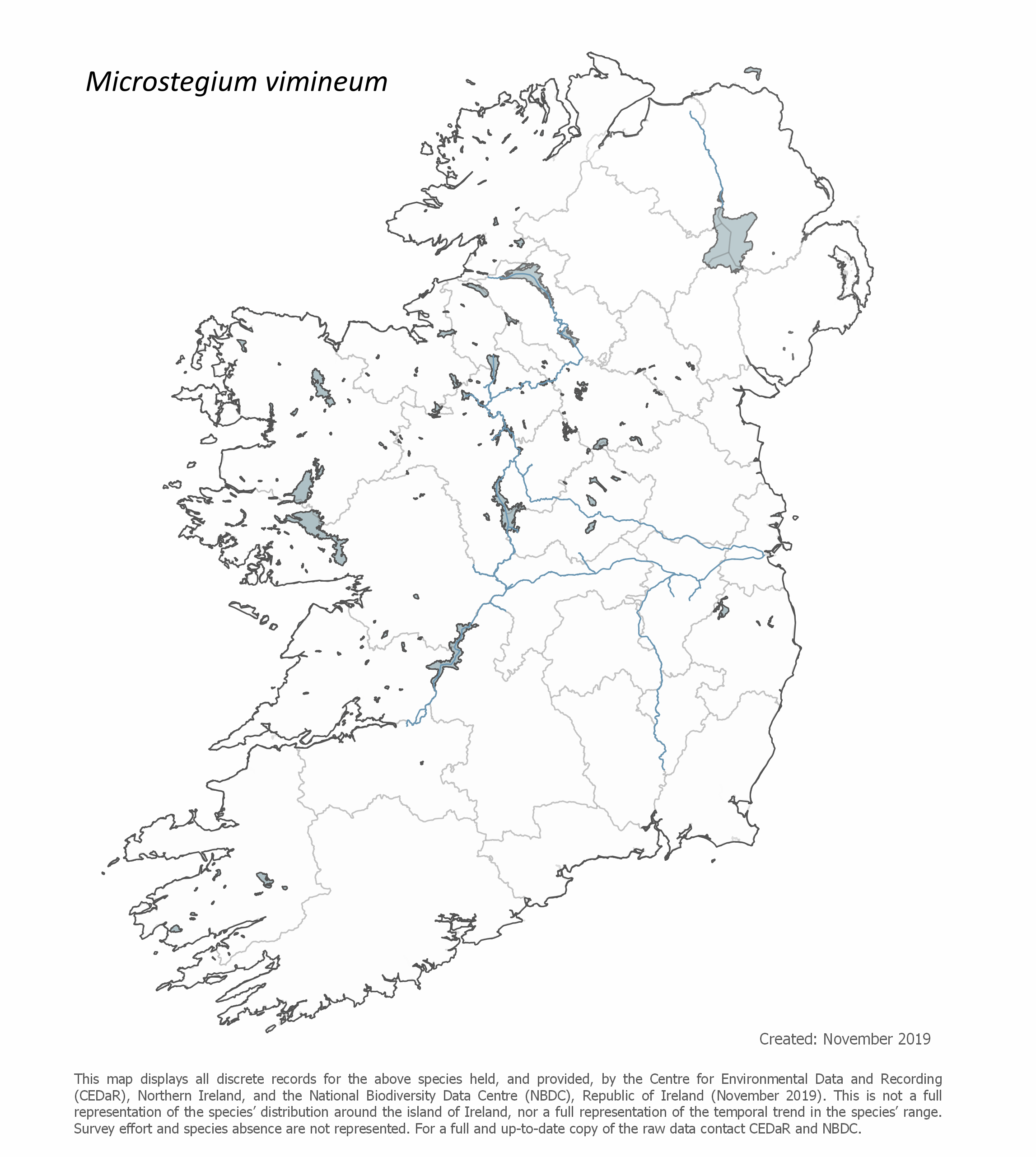
- Not present in Northern Ireland.
Methods for Prevention:
- A trade ban and pathway management is required to prevent this very damaging species from invading the EU. Its seeds can spread as contaminants on shoes and clothes, machinery, bird seed, soil or plants for planting.
- Report all sightings.
You can help by reporting any sightings: @ the Centre for Environmental Data & Recording (CEDaR) - Or via the iRecord App.
Current Legislative Position (Listed on 03 August 2017)
- This species must not intentionally be brought into the Union; kept; bred; transported to, from or within the United Kingdom, unless for the transportation to facilities in the context of eradication; placed on the market; used or exchanged; permitted to reproduce, grown or cultivated; or released into the environment.